Etiqueta: technology

  • Marrying a company

    On 2015 I was really happy to move all my photos library onto Google Photos.

    Google Photos was perfect, and it’s still probably the best cloud photo library out there. It has a great timeline, excellent album and classification features, as well as sharing capabilities.

    The problem? Because of how Google’s business model is set up, they will do everything in their hand to keep you from leaving their service. It makes sense for them to make their product as good as possible so you don’t feel the temptation of leaving, but at some point Google implemented some practices that made me feel uneasy having my photos in their service.

    First of all, they make it as unintuitive as possible to download your photo library. To do so, you need to access an obscure configuration site in your Google account that lets you download all your data, select only photographies, and select a few options about the download that only tech-savvy people will understand.

    After downloading my pictures, I realized that Google has literally no option letting users delete their pictures automatically. The only alternative is to select them one by one, or go nuclear and delete the whole account (something that they well know nobody will do, since it’s tied to their email service as well). If downloading pics is for tech-savvy people, deleting them is out of reach for anyone without a notion about programming: I had to use a Javascript script that would automatically select all images and delete them, and disable CSS rendering to make the process quicker.

    It’s clear to me that Google wants you to marry them. Not only that, they want to be like an abusive husband: leaving you no other option than to stay with them.

    If I have to marry a company, I want it to be like my wife, who makes sure I have as much freedom as possible, so as I will stay with her because of how much I love her and how much I get from our relationship.

    During the last few years, I find myself giving lots of thought into what companies I choose for things that matter. I pay lots of attention into businesses that include an exit plan, not only easing how you start using their products, but also how you stop doing so.

    For example, I chose Bitwarden as my password manager and plan to keep my subscription for two reasons: their product is built onto open source software, so if they decide to just shut their business, there’s a good chance someone else will come and keep the service going. And second, they have really straightforward export capabilities that let me do periodic backups of my password library and will allow me to go somewhere else if for some reason I’m not happy anymore.

    I also chose to host my own cloud using a Synology NAS, where I keep my current collection. They might stop providing support and updates to my device one day, but as long as the NAS is running its software and the services that come bundled will keep working as expected. My pictures are just in a folder that I can just drag-and-drop into another service if I want, and with a second device for backups (in a different location) it’s, although expensive, just as safe as Google One.

    In the future I will continue to choose freedom and stability over convenience, even if that means paying a higher price.

  • First dive into car tech

    My wife and I took the chance to upgrade our old Chevrolet Spark to a newer Volkswagen T-Roc. This is a huge bump up for us. We needed a bigger car now that we’re heading into adulthood and starting a family. Technology and safety features were also a big factor in our decision making. We didn’t plan to get such a good car, but turns out my 194cm of height can’t really get comfortable in any car, not even models we thought were big.

    As a tech enthusiast, this is not quite the high-tech jump I would’ve dreamt of (I’m really looking forward to trying EVs and self-driving capabilities) but nonetheless we found ourselves light years from where we started.

    Our new car is much safer than our previous one, full of features like lane detection, adaptive cruise control (which is almost like magic), automated parking assistant, fatigue detection… It has automatic gear switching (which is not a common feature in Spain), and it’s also comforting to drive a newer and up-to-date car (I was worrying our luck with the previous one could run out at any moment).

    In hindsight, I feel like a bigger jump could have made me feel a bit overwhelmed. This setup has already taking lots of getting used to as it is. Watching the wheel turn itself automatically (for the park assist) can be very stressful at first, so I can only imagine what it’s like to see it while going 120km/h in the highway.

    I’m really looking forward for the next step in a few years, but I’m pretty sure this is the appropriate one at the current moment and context, the one that feels «right». The next move will be much easier now that we’re already on a higher tier of quality and tech.

  • Are we in a Black Swan decade?

    Are we in a Black Swan decade?

    According some random definition found on Google, a Black Swan event is: an unpredictable event that is beyond what is normally expected of a situation and has potentially severe consequences.

    Classic examples of Black Swan events are inventions or discoveries like computers and the Internet, Steam machines, electricity or fire. Each of these changed the course of history forever, and no one could have ever predicted them.

    Black Swan events are a beautiful paradox: you can’t reasonably expect them, but they need to be accounted for if one wants to make precise predictions about the future. You can’t really know what will be the one thing that changes everything, but you’ll be a fool to think that nothing will change everything at some point.

    I think this is an interesting thought because Black Swan events are often overlooked by most people. Whenever we try to predict how things will be in the future, people have a tendency to focus in the current state of things and ignore any kind of technological development that could potentially happen in the future. To some people, any kind of tech improvement is a Black Swan event: that’s the reason why people fail to see the innovation in developments like the smartphone (when they came out) or electric vehicles.

    It’s really hard to envision a world where everybody drives an electric vehicle if you do so in the current context. There’s no way to charge an electric vehicle nowadays in 5 minutes, just like we do with petrol cars, and we don’t have the necessary infrastructure to feed our whole current vehicle pool only from our current electric grid, let alone energy sources. But it’s foolish to think that this is how we’re supposed to do such a transition.

    To envision the future we need to acknowledge how society, habits, and technology are going to reshape in the following years. We’re going to change how we get energy, distribute it and spend it. Energy generation and storage, at the current rate (we don’t even need a Black Swan event here) is going to get progressively cheaper in the following years. Electric vehicles, an obscene luxury only with lots of inconvenients a few years ago, are nowadays already commonly seen in the streets, and are only subjectively more expensive than a combustion model with similar characteristics. This will only get better in the following years.

    A Black Swan event, like the potential discovery of a room temperature superconductor material, could accelerate all of it exponentially. If the current studies on superconductor materials are fruitful, we could see a similar or bigger reshape of our reality than the one caused by the Internet or television. We could see electric vehicles that charge almost instantly or electric infrastructure that generates no heat or resistance at all. For now this is just speculation, of course, but we could

    Another, more realistic, example of a Black Swan event is the rise of Large Language Models (LLMs). They’ve actually been around for a few years already. I had the chance to experiment with the precursor of ChatGPT a few years ago, and now use LLMs everyday for all sorts of daily tasks.

    Before, if you wanted to communicate with a computer, first you needed certain knowledge about computer science. You needed to know the extremely specific way of telling the computer what you wanted. Otherwise, you needed someone who could develop an interface that was easier to understand, and then you still needed to learn how to use such an interface.

    Now, with Natural Language Processing, you can just tell what you need and expect your computer to just understand it and act accordingly. The ability of not only understanding commands, but also context, is going to (and already is) change dramatically the way we interact with computers during the next decade.

    We’re going to witness a race to integrate this technology into all kinds of applications. It really is so good, that any existing application could see potential benefits in implementing it. Even if it means the market gets saturated for some time, as we’re also seeing lately.

    It’s for sure an exciting time to be alive. The current context is the prefect breeding ground for all sorts of developments that could reshape our life in the following years.

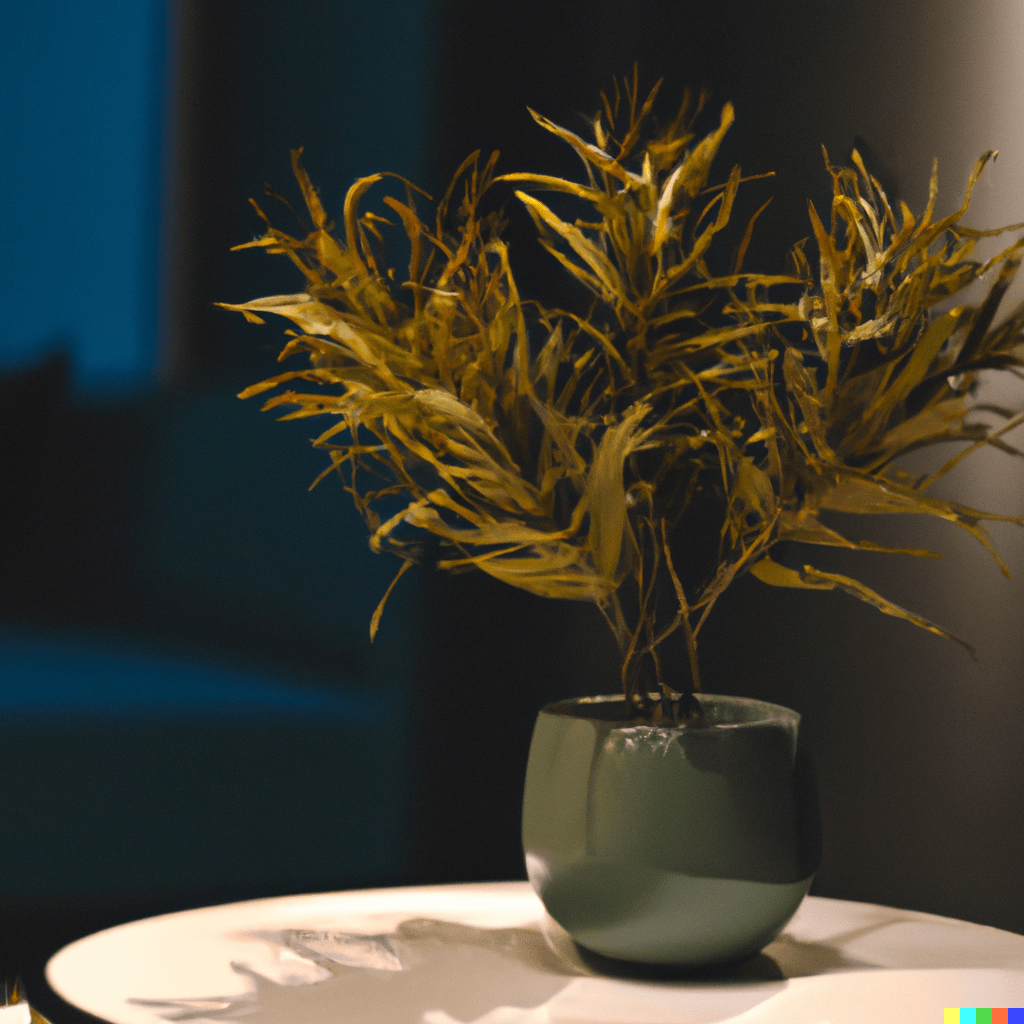
  • My new hobby: taking care of plants

    My new hobby: taking care of plants

    I’ve always been a «fake plastic plant» kind of guy. Never cared too much about what plants needed to be alive, and watering them was just not in my schedule.

    Since I hate anything that is fake, the result is that I didn’t have plants at all, neither real nor plastic. Apart from an almost dead sanseviera and a couple lucky bamboos.

    Recently I took some determination to actually take care of plants, and found myself actually enjoying it. I was able to resurrect some of my absolutely neglected plants and am now actually getting new ones. Turns out the Sanseviera is an astoundingly resilient plant: it has the ability to overcome serious droughts. So after watering it down a bit and removing the ugly leafs, it now looks gorgeous.

    Since I don’t have the slightest clue about plants, and everything in my life needs to have some amount of technology, I looked towards my phone for help. I found an app that lets you snap an image of any plant, and detect its species. Then, I get instructions on how to take care of it, and reminders of when the plant needs to be watered or fertilized. It’s kind of a swiss knife that detects plant’s illnesses, problems, lack of light, etc. I don’t want to mention the specific app because I know there’s many alternatives out there, but it will take you less than 2 minutes to find it on the iOS App Store.

    It’s impressive how much life a bunch of plants can inject in your house. It’s no wonder all interior design catalogs incorporate them: they can turn a cold impersonal space into a cozy and familiar «home». It makes life better in a way that probably goes into our subconscious, into some deep primitive instinct that connects us with nature. If that makes any sense, and I’m not the kind of person who’s into new-age crap.

    It’s also helped me on a personal level: all the hobbies I’ve ever had always had some connection with technology. Taking care of plants only takes a few minutes a day (at most) and is an activity that lets me disconnect from technology and the negativity that can come out of it.