I started writing in English because this language was a large part of my life, I wanted to improve my writing and I liked the idea of being seen as someone who communicates in English. I have a feeling that lots of people reach my blog through my LinkedIn profile, so it’s also a bit of a competitive advantage in Spain, where most people have big difficulties to speak English. Or at least it shows that it’s not my case.
But right now I think I’m in the process of reshaping what this blog means for me, I want to think less about what I write and I want to take it closer home. I want to open more parts of my life to it, look for topics that are maybe not as carefully chosen as they used to be, but on the other hand more personal. I realized choosing topics takes a lot of energy in the process of writing here, because I am afraid of how I may be seen by someone who stumbles across this and maybe knows me personally. I would like to be more impulsive.
So as someone who feels both languages as part of myself, it makes sense to write in both languages too. To be honest it’s very likely that I start to write mostly in Spanish from now on, but even though I don’t have that big of an audience, I don’t want to alienate any of those who subscribed in the last few months and expect English written articles.
At the top header you will now find a link to Kagi translate, which in my experience provides really decent AI-powered translations. I will look for even fancier ways to allow switching languages in the future, but for now that’s straightforward enough.
Anyway, I hope this new approach brings more life and purpose to this blog.
My grandmother was absolutely ahead of her time. Unlike most older people in Spain, she was able to remain current with the latest technologies.
When I was approximately 12, around 2004, blogging was still a long way off from becoming mainstream, at least in Spain. My grandmother, who had barely learnt to use a computer through a course for senior citizens, showed me something that would completely change the way I saw the Internet: she didn’t just consume it, she had her own place there. She had opened an online blog through Microsoft Live Spaces, one of the main competing platforms in the blogging space at the time.
Microsoft Live Spaces was at the time superior to other online platforms, and it probably was one of the early social network precursors. It was later discontinued, because someone at Microsoft didn’t find a way to make money out of it. I guess someone pulled their hair out when they realized how close they were to nailing social networks.
Anyway, the idea of having my own online space immediately caught my attention, and I soon had my own space. I might’ve been the only 12-year-old within a few kilometers engaging in voluntary writing. Now I wish I had saved some of it because I did write a bunch of hilarious posts.
As things stabilized, the original “glamour” of blogging slowly faded away, and the remaining platforms became less innovative and more stable. Some features caught on while others drowned as the gimmicks they were. I opened my first WordPress account when I was 14 or 15, and I recall spending quite some time writing stuff. I was really into computer science at the time so I basically tried to write things that could be interesting to someone and rank better in Google’s algorithm. Stats and views were really important to me at that moment.
My focus on blogging has changed entirely since then. I guess I wanted to be seen and grow, now on the other hand I see this more like an introspective thing, dare I say, therapeutic. But obviously it’s still about being seen, about exposing myself. But most importantly it’s about me, for me, not about what I’m paying attention to or about the newest viral bullshit going on. If someone (even myself) ends up reading these lines, they’re making a serious time investment in it and clearly resonating with it in a way that I could not possibly achieve through other media.
Something about this blog makes it a lot more real than all the other social networks around. I’ve tried to engage on Twitter, Instagram, and other networks a thousand times, but it just doesn’t last. It gets exhausting really quickly.
No matter how hard it has always been, blogging stays in the back of my mind as something I want to do. I still want to do this. I think I should fight for this because it requires commitment, focus, and allocating time only to one thing, and that’s something I struggle with. Most of the things that I feel I’m failing in my life require the same things. Maybe getting blogging right takes me a step closer to other good things too.
Since I know I want to keep doing this, I’ve been thinking about different ways to engage with it. It’s become clear to me that perfectionism will move me away: I’m just spitting words right now, and that’s how I think it should be. If I start going back and forth between paragraphs and trying to make this post make sense, it’s just never going to be good enough. It will take me 4 hours to make a post that I can feel good with, and next week I will completely forget about my blog because who the hell has 4 hours to spare on this.
This year my grandmother left me with a lesson about memory: we must take control of our time and not give up our attention to important things. I am hoping that by following her steps and focusing more on this blog I can start a wave that resonates with other aspects of my life.
NOTE for readers: I am not a health professional. Everything I write here are the experiences of a normal human being, and shouldn’t be taken seriously as suggestions or diagnostics without consulting with your doctor.
Being overweight has always been one of my main life struggles. I’ve never been severely obese, but its shadow has followed me since my teenage years. For a few years during the late 2010’s I was able to overcome it, but I slowly crawled back to being overweight until now.
I’m really tall, at 194 cm, so at least I don’t get a lot of the shame of overweight. Most people are surprised to learn that I’m actually slightly obese (at ~114kg) because my height kind of compensates for it.
Also, weight used to be a big deal during my 20s, but now that I’m married and have a kid, I don’t feel the need to impress anyone. My only reasons for wanting to lose weight are purely health and, maybe, feeling better with myself.
Since I know many others are in this same journey or trying to learn more about it, I wanted to share some thoughts and experiences about this.
Is taking a med to lose weight ok?
So my first concern about this is, should I want this? Is this the right way to lose weight, or am I cheating? I think first of all you should ask yourself if you need it.
I believe that if you go to your doctor just to ask them if they can give you Wegovy you’re starting with the wrong mindset. You know perfectly why you want to talk directly about a med: it’s not the first suggestion your doctor will give you after learning about your problems.
You can’t just go to your doctor and give them a diagnostic and a treatment. That’s not how it works: you go to your doctor to talk about your issues, and then you get a set of suggestions that, normally, you don’t like at all. You already suspect most of what the doctor will tell you. You will have to do all of that EVEN IF YOU TAKE MEDS, and specially AFTER you achieve your objectives, so you don’t immediately throw your progress away. Those lifestyle changes are forever and if you’re going to medicate yourself you better not waste this shot.
After some years of back and forth with my doctor, she suggested me to try meds. The health motives behind this suggestion were a metabolism that had a serious risk of becoming diabetes in the long run, and a liver that was fatty and would also pose a risk in the long run. So weight is actually not the main reason for me to get serious with health, but it’s heavily linked to it.
All the serious health issues I have are completely reversible, and I can undo the damage with a change in lifestyle and some lost weight. So if I’m serious about it, why take the meds at all? I think it’s like an insurance, or a warranty. I don’t have the best track record in losing weight and getting serious with my health, so I’m not going to bet all of it onto my sheer willpower if I have an alternative. Wegovy provides me a much higher chance of success: if I failed, the next time I might not have the opportunity to fully revert my situation.
It’s also a medicine that interacts with the liver in ways that I don’t understand at all, so it’s not just about the weight, there are other medical reasons to take it.
I know it’s not the socially acceptable and “pretty” way to fix all of my problems, but I have the rest of my life to do all the right things, my priority right now is to get out of risk and I’ll use any tool available for it (as long as it’s prescribed and recommended by a doctor, of course)
How does Wegovy feel?
After getting my first shot I was kinda expecting to feel something, but I just didn’t. Besides the slight discomfort of the needle, there’s no immediate feeling.
During the first 24h I felt nothing at all. After that time, I started feeling slight nauseous. I actually had a family gathering that day, so I would have usually eaten heavily that day, but found myself unable to eat more than a standard serving. I was full.
So that’s it, that’s how Wegovy feels: you’re full. All the time. The following days the sensation became stronger and at some moments I was almost unable to eat even after many hours of fasting. On the worst days it’s like trying to eat something after a Christmas meal: you try to eat but feel the food going up your throat. Even though there’s no food at all in this case.
Your body adapts quickly to it and soon it becomes more like a regulator. You start eating normal sized meals and feeling full after it.
That’s why I think this med actually helps with habit forming. The first weeks, whenever I saw a massive plate my head said “I can eat this” because I would usually be completely able to take it all in and then go for another round. Now, I feel like my mind is slowly having to re-learn what’s a normal sized meal, and not desiring to keep eating even if there’s more food available.
I don’t know what will happen when I drop the medicine but I’m sure food is not going to look the same as it did before. At that moment, I will have to be careful not to do the same mistakes again, but I will have somewhere to start from.
Did it have side-effects?
Besides some nausea for the first days, I’m not sure if I can call my other “effects” a direct side-effect of Wegovy.
Apparently, amongst many other things semaglutide does two important things: decreases your body’s secretion of glucose, and increases your body’s secretion of insulin. Take that, and also lack and of hunger (i.e. you don’t eat as much as before), and you get hypoglycemia.
When you have a large meal your body compensates producing lots of insulin to lower your blood sugar. If the meal is REALLY large, your body overcompensates for it and causes what’s commonly known as a “sugar crash”, causing hypoglycemia.
I had two different issues that lead to the same situation. I’m used to eat whenever I feel like it, which is just often enough for me to replenish all the nutrients needed in my body. But now I can spend full days almost not eating.
So I started feeling very tired without an explanation. It was progressive and not bad enough to worry about it, but I was getting consistently tired. I didn’t really know where it came from.
And then I went on vacation for a weekend and had a big breakfast one day. It wasn’t even big for what I used to eat, but it was huge for my new “standards”. Two hours later I was absolutely wasted. That same feeling from the previous days but much much worse, and with new symptoms like headache, heart palpitations, and slight cold and tremors.
To make matters worse, I was completely full from such a big breakfast, so eating was not in my top-40 priorities. After a visit to the ER everything made sense. It was something that never happened to me before: I had low blood sugar.
I learned two important things that day: how low blood sugar feels, and that I can’t just eat mindlessly whenever I feel like it. I need to consciously mind what I eat and what I don’t eat.
Takeaways
My takeaway is that Wegovy is not only helping change my mind about how much I can eat, it’s also forcing me deeply think about it. And this would have been much harder to learn without this med. After this experience I realised what I eat has a direct impact on how I feel for the next few hours, or even days.
I found myself taking care of my carbs and iron intakes in a way that I had never before, and now I think I feel even better (less tired) than before starting, when I ate as much as I wanted. That’s something I will forever be taking an eye on: even if I fail miserably in my journey, whenever I feel tired this experience will come to my mind.
I’ve lost 4kg during this month, and my doctor has decided to stay on the same dosage for the 2nd month, mainly because we want to keep an eye on those sugar levels and make sure I am stable before going up, and also because you don’t take the dose up unnecessarily if it’s giving the desired effect as is.
Losing weight consistently is also extremely helpful to implement all the lifestyle changes that are needed. If you’re reading this, you probably know how it feels to do “all the right things” for a month just to find you weight more than when you started.
I think providing a consistent sense of progress is really helpful, and the fact that going “wrong” has consequences (like in my bad breakfast example) also helps equalize temptations out. Now I know I can indulge, but indulging big is just not an option, and it’s important for me to learn that. Without the consequences it would have taken me much longer to realize this.
On 2015 I was really happy to move all my photos library onto Google Photos.
Google Photos was perfect, and it’s still probably the best cloud photo library out there. It has a great timeline, excellent album and classification features, as well as sharing capabilities.
The problem? Because of how Google’s business model is set up, they will do everything in their hand to keep you from leaving their service. It makes sense for them to make their product as good as possible so you don’t feel the temptation of leaving, but at some point Google implemented some practices that made me feel uneasy having my photos in their service.
First of all, they make it as unintuitive as possible to download your photo library. To do so, you need to access an obscure configuration site in your Google account that lets you download all your data, select only photographies, and select a few options about the download that only tech-savvy people will understand.
After downloading my pictures, I realized that Google has literally no option letting users delete their pictures automatically. The only alternative is to select them one by one, or go nuclear and delete the whole account (something that they well know nobody will do, since it’s tied to their email service as well). If downloading pics is for tech-savvy people, deleting them is out of reach for anyone without a notion about programming: I had to use a Javascript script that would automatically select all images and delete them, and disable CSS rendering to make the process quicker.
It’s clear to me that Google wants you to marry them. Not only that, they want to be like an abusive husband: leaving you no other option than to stay with them.
If I have to marry a company, I want it to be like my wife, who makes sure I have as much freedom as possible, so as I will stay with her because of how much I love her and how much I get from our relationship.
During the last few years, I find myself giving lots of thought into what companies I choose for things that matter. I pay lots of attention into businesses that include an exit plan, not only easing how you start using their products, but also how you stop doing so.
For example, I chose Bitwarden as my password manager and plan to keep my subscription for two reasons: their product is built onto open source software, so if they decide to just shut their business, there’s a good chance someone else will come and keep the service going. And second, they have really straightforward export capabilities that let me do periodic backups of my password library and will allow me to go somewhere else if for some reason I’m not happy anymore.
I also chose to host my own cloud using a Synology NAS, where I keep my current collection. They might stop providing support and updates to my device one day, but as long as the NAS is running its software and the services that come bundled will keep working as expected. My pictures are just in a folder that I can just drag-and-drop into another service if I want, and with a second device for backups (in a different location) it’s, although expensive, just as safe as Google One.
In the future I will continue to choose freedom and stability over convenience, even if that means paying a higher price.
I recently came across an article from a guy who has very interesting thoughts about how to generate a skill. He’s specifically concerned about how to become better at writing, and explains how lots of writing is not enough to become a good writer.
This is something I’ve struggled with too. I’ve been a blogger for many years, but always oscillate between writing a lot and not writing at all.
Let’s think for a second about the mind of someone who writes a blog. They don’t think about money (blogging rarely becomes a serious business), they don’t do it to sell anything. They just think they have something inside and want to throw it at the world. Blogging is an act of ego, it’s about what one thinks of himself, and as such, it must be perfect.
A blogger cares a lot about what others think of them, which is exactly how one becomes a perfectionist. As a perfectionist, writing is an uphill battle: bloggers end up spending many hours on a single article, most of which is just reviewing and editing.
In his article, my blogger makes really good points about how you can’t just write an article and thoughtlessly publish it. Our mind has different levels of focus, and keeps working on a task even while we are not actively doing it (this is 100% true by the way), so he suggests to let articles “marinate” before publishing them.
I agree with these ideas, but I think it’s counterproductive for someone who still in the habit forming phase. Caring too much about how good an article is will make us dread writing it, and thus kill any chance of forming an habit to write.
Unless you really want to be a professional writer, I think blogging must be, first of all, for ourselves. A self-care act, even. Perfectionism is how you end up dreading the task: just thinking about the things I need to get right to publish a really good article makes me not want to write ever again. And it’s absolutely impossible to create a habit if you start by dreading the very same habit you’re trying to create.
To me, the whole idea of “letting articles marinate”, is also a perfect recipe for failure. At least at the beggining. If you really want your articles to be better the first step to improve is to avoid dreading the task. Just write, forget if it’s good or bad, it will become better with time.
As we keep growing, we will start structuring the text better, making less mistakes, and improving. We might also start spending more time on each article if we grow an audience, it’s much easier to spend time on it if we know there’s people who care about and are waiting for it.
Writing is hard. You need to figure out what you want to write about, find time to actually do it, find out how to structure your ideas in an interesting manner and finally, actually get to it.
Intending to do that with any kind of regularity (let alone to do it daily) is hard. Really really hard.
Regularity has always been my weakest point. I’ve always thought highly of myself, and have some notion of what I could achieve if I got to find some kind of regularity in my life. If I was able to spend some amount of time, every day, focused on achieving a specific goal, I’m pretty sure I would eventually achieve it.
But that’s where things get hard. You can start writing in your blog for one day, two days, a week, two weeks. When will engaging in such an activity become too unmotivating? When will booting up the game console become much easier than writing?
My bursts of determination inevitably end up converging in a specific kind of activity. I’d call it something like “the comment section passionate achiever”. It’s what happens after 3 hours of not doing what you should be doing on the Internet. You enter a post about a topic you’re interested in, you enter the comment section, and find out someone (usually an anonymous commenter just like you) had the courage to be wrong on the Internet.
What follows is a no less than 35 or 40 minutes session of passionate writing. I find myself effortlessly articulating my opinion about the topic. Not only that, I find myself looking for the perfect structure to make sure that my comment leads to any reader’s conclusion that this guy is incredibly wrong.
After that, I realize I have done it: I fooled myself into being productive. I just did what I was supposed to do regularly and didn’t even blink an eye. Of course, I did all of that in the one place where it cannot possibly lead to anything that makes it worth it. My comment will get lost in the bast abyss that is the Internet, and the other guy will, in the best case scenario, diagonally read my opinion without and of course he won’t change his opinion in the slightest.
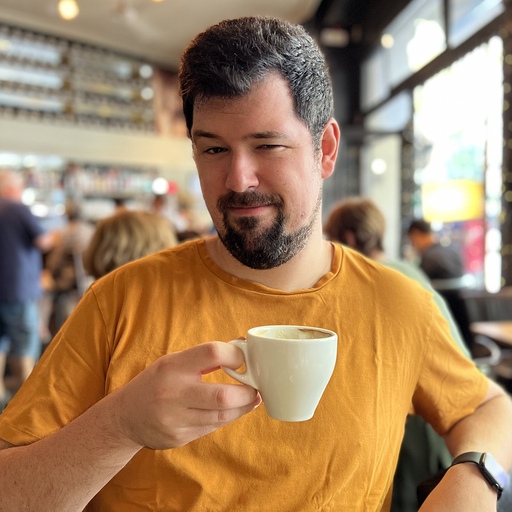



 Daniel Barca