Author: Dani Barca

  • Why I switched back to WordPress

    Why I switched back to WordPress

    A few years ago I decided to host my blog in a static GitHub pages generated through Jekyll.

    I had a bunch of really good reasons to do that. I sincerely believe that we often abuse dynamic sites these days, and that a personal blog is a use-case that can be perfectly addressed with a static site.

    Why spend a huge amount of resources every time you load a site, if you can go through all of that once, and just serve the same result every time someone asks for it? I think platforms like WordPress are missing an opportunity to save lots of resources by pre-generating all the content that is not supposed to change in a site.

    The only part of a website that could require some dynamic load in a blog is the comments section, which due to user’s interactions, would be potentially impractical to pre-generate every time someone adds a comment. And even in this case I have some ideas about it: the backend could save a copy of the generated comments section every time someone contributes, and keep it until there’s a new one.

    There’s lots to be explored in this area and we don’t even need to give up many of the features that we enjoy on dynamic sites, but seems like there is no platform like that nowadays.

    The process to write a post using Jekyll was cumbersome: it required to remember too many steps, I had to think about Markdown, git repositories, compiling Jekyll… It’s by no means a complicated process: for someone like me with a career in computer science, it’s really easy to understand. But it’s cumbersome.

    Having to go through this whole process meant that I rarely wrote posts. And what’s the point of having a super-efficient blog engine if I don’t write posts at all?

    WordPress, on the other hand, has a beautiful editor, with automatic draft saving, an actual UI to set up tags, attributes, images… God, even something as basic as the post date setting up automatically to the date when I publish my posts (this is something that I need to manually setup on Jekyll).

    Another feature that I didn’t realize I was going to miss so much are statistics. For my Jekyll page I basically gave up to have any kind of stats. I had analytics through Cloudflare’s platform, but these were basically useless. Most hits came from search engines or web crawlers. I tried to use Google Analytics as well, with similar results; GAnalytics seems to be great but also too complex for a simple blog. WordPress analytics turn out to be an awesome noise filter and the ones that better represent actual people entering my site.

    I figured I would be able to write blog posts “only for myself”, and not care at all about who reads it. In practice the lack of feedback makes it extremelly unmotivating and even worse. Just knowing that someone got to open it and saw that I wrote something (let alone read it) is so much better.

    The truth is that having a platform designed to write and manage posts is a frequently overlooked key benefit of a specialized tool like WordPress. Being able to code-less configure every aspect of my site, or change its appearance on the fly; as well as understanding the level of reader engagement and recognizing what you’re doing right or wrong.

    Sometimes you need to lose something to appreciate what it’s worth. I still firmly believe in the benefits of statically hosted sites, but in the future I will be mindful of all the other needs I must meet.

  • Aliens?

    Yesterday, several military personnel and a former intelligence agent were interrogated by politicians in the US. The interrogators were trying to figure out if the US was secretly in possession of information about extraterrestrials, UFOs.

    During the questioning and under oath, these individuals clearly stated that the US is in possession of not only information, but also crashed UFO material and non-human bodies. They also described an aerial incident in which they had contact with a pill-shaped UFO that had

    What’s special about this occasion is that never before such claims have been made under oath. If this were confirmed to be true, we’d be in front of the biggest event in the history of humanity. The existence of not only life, but another intelligent civilization would have massive consequences in our society.

    Sadly, my personal bet is on the pessimistic side of the story. Most people are really excited about this news and they are too eager to trust anything that confirms their personal point of view. Sadly, “wanting to believe” is not enough to make something true. I think that for something like this to really be confirmed, we’d have to go through a battle against odds.

    These individuals might be straight out lying: money is a good reason to position yourself as the *one* individual that knows “the truth”. Even under oath. A couple books, TV interviews and Podcasts and you have your retirement secured. Their arguments are built over a conspiracy as base, so no matter what you do, it can’t entirely be disproved. Any effort to disprove a conspiracy could be explained by the fact that you’re part of such conspiracy.

    Even if they’re not lying, there’s a good chance they “want to believe” too hard, or that they’re not smart enough to know what they saw. Maybe the UFO was just some secret military prototype that they shouldn’t have seen, and the bodies could be just anything. A strong reaction from superiors after knowing could have fueled the fantasy.

    The pill-shaped UFO could be an instrument artifact paired with an optical illusion. Any artifact during a mission, however unlikely, pales under the unlikeliness of seeing an alien spaceship.

    Truth is, the US is not the only capable military force in the world, so even if they made a huge effort to cover the presence of extraterrestrial individuals, it’s also hard that such encounters wouldn’t be experienced by another nation with less inclination for secrecy. ¿Maybe all nations are in the conspiracy? The bigger a conspiracy is, the harder it is to believe.

    It’s also hard to believe that with the technologic boom we’ve gone through during the last few decades, there’s no good material to hold onto. We all have a 4k resolution camera in our pockets, and the skies are explored better than ever. As years pass it becomes harder for anything to become unnoticed, but there’s still nothing solid regarding extraterrestrial life.

    There’s a bunch of possible explanations that, although harsh, have immensely higher chances to be true than “aliens”.

    But I don’t want to be the one to spoil the party. I am really excited to learn about these questionings and really looking forward to see what comes out of it. Hopefully we can beat all the odds and be in front of the most important thing that has ever happened to us. Maybe I just want to believe, a little.

  • Reinventing Twitter

    Reinventing Twitter

    Twitter, as we know it, is coming to an end. They recently announced a total rebranding to what we’ll know as x.com from now on. It’s an interesting decision coming from Elon Musk, who intends to turn Twitter into some sort of “everything app”.

    It’s easy to dismiss anything Elon Musk does as folly, but the truth is that it doesn’t matter how much you dislike the guy: he’s one of the greatest achievers of our time. He’s been at front of several of the greatest companies of our time, and no amount of luck could make a fool accomplish all that.

    I think it’s clear that Elon Musk has a very specific vision of what he wants Twitter to become, and it’s something that appears hard to visualize for everyone else.

    All the apocalyptic predictions coming from his detractors have turned to be wrong. Twitter was supposed to implode technologically following the layoff of several thousand employees. Advertisers were expected to abandon the platform in droves, and users were supposed to flock to other platforms like Mastodon or Threads. By now, Twitter should be a desertic wasteland.

    But the truth is that, 10 months into Musk’s acquisition of Twitter, none of that, except for a couple brief moments of panic after some big change.

    On the other hand, Twitter’s rebranding has turned out to be somewhat… rustic. Personally, I would’ve never anticipated such a sloppy transition: if this isn’t Twitter anymore, how do we call tweets and retweets? What’s the logo like? What’s their website domain?

    They merely swapped their website logo to the one proposed by the first commenter in Musk’s post announcing the brand change, and then redirected x.com to twitter.com. So the site is still full of references to twitter, tweets, and birds.

    In the process, they effectively obliterated one of the most iconic and enduring brands on the internet. Twitter has been with us for the last 17 years, few brands on the internet are so resilient, and now it’s just vanished.

    Musk could have planned a smoother transition. Lots of people are going to have a bad time understanding that Twitter doesn’t exist anymore, and that they are now supposed to refer to it as just X.

    Despite this, I’m looking forward to see what X becomes. Truth is they still have the userbase and the reputation. It’s pretty amusing to see how Musk’s detractors like to rant about how Twitter’s doom… on Twitter itself. There’s clearly some sort of friction that makes it hard to find somewhere else to talk about it.

  • Trying Enchroma’s glasses

    Many years ago, when I was around 14 years old, I visited the City of Arts and Sciences in Valencia with my uncles. It’s a futuristic complex of buildings that includes a science museum.

    One exhibit in this museum was about color blindness. Color blindness tests consist in a series of dotted patterns where each dot has a different color, forming the shape of a number or letter in the middle. Color blind people struggle to differentiate such colors, making it difficult or impossible to identify the shape. It soon became clear that I was mildly colorblind, specifically in the red-green spectrum. According to some stats I found online, 8% of men are colorblind.

    This discovery didn’t really have a big impact in my life, but I kept some interest in learning more about it and curiosity about how the world is differently seen by other, non-colorblind people. I did some occasional research about it and found out about a bunch of videos that went viral: some company called Enchroma made a pair of glasses that allowed colorblind people to see color. In the video you could see people crying when they saw color for the first time.

    Obviously I was instantly curious about it, but it was logistically complicated. Enchroma’s glasses are expensive and not guaranteed to work on everybody, their results vary and you need to try them for a few days before fully appreciating color. They were also sold uniquely in the US, so there’s a big risk of having to go through complex logistics in case I decided to return them.

    There’s also some technical concerns: nothing can really make see color as non-colorblind people do. The only actual solution would be to alter my genetics in such a way that my eye cells react appropriately under green and red light. All things considered, I decided to wait a few years and see if the company expanded.

    And so they did. At some point they started selling their glasses in a store near Barcelona, and my aunt found out about it. She gave me a pair as a present and it’s being one of the most interesting experiences in my life.

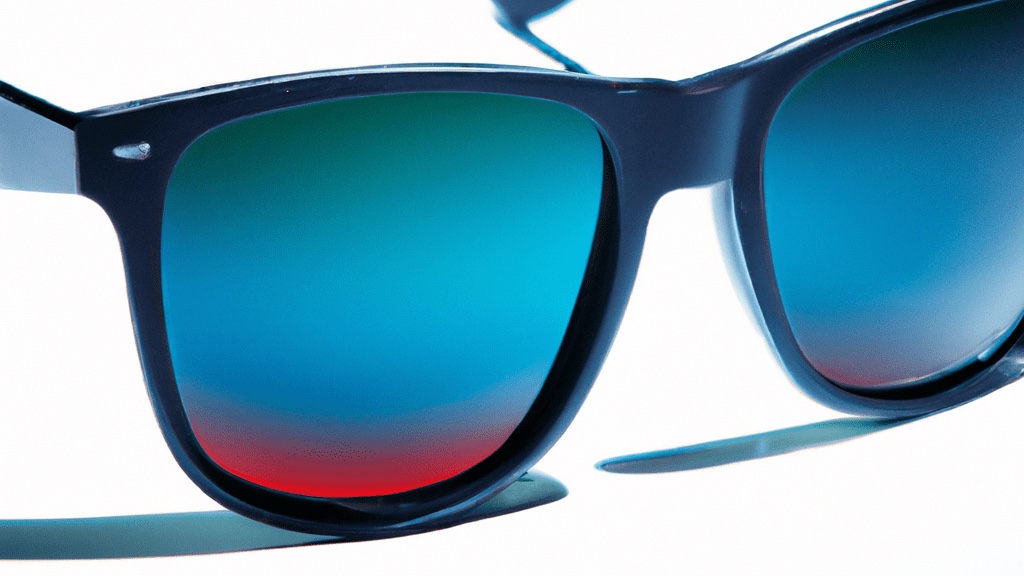
    Enchroma work by filtering out certain wavelengths that overlap between red and green colors. The result, for anyone who wears these glasses, is a kind of saturated image but most importantly, for a color blind it “forces” red and green to look different, instead of merging in a mushy set of brown gradients.

    In practical terms, this means I am now able to appreciate a huge difference in any color that contains any amount of red or green. The colors I was more impressed about were purple, pink and orange.

    To be clear: I’ve always known how purple, pink and orange look like. I I can identify them when they’re isolated, say, on a screen, or when they dominate an environment. But I completely lose them whenever they compose small details in a more complex image, like some clothes in the street, a small graffiti, or a distant building.

    Wearing these glasses, I realized these colors are far more common than I thought. As I walked around Gracia I was continuously shocked by small details: a flower in a window that I would have overlooked before, some guy’s brightly colored clothing, vehicles… It turns out that Barcelona is a far more colorful city than I realized.

    Now I wear my glasses whenever I get the chance. Even though I know I don’t really see the world as it is, I get to enjoy the variety of shades that the world offers. If you’re colorblind like me, I’d say these glasses are 100% worth what they cost. Give them a shot and good luck!

  • 34°C

    34°C right now around Barcelona. A red IPA joins me into reading Apprenticeship Patterns, a book about life as a programmer.
  • Humanz

    Humanz


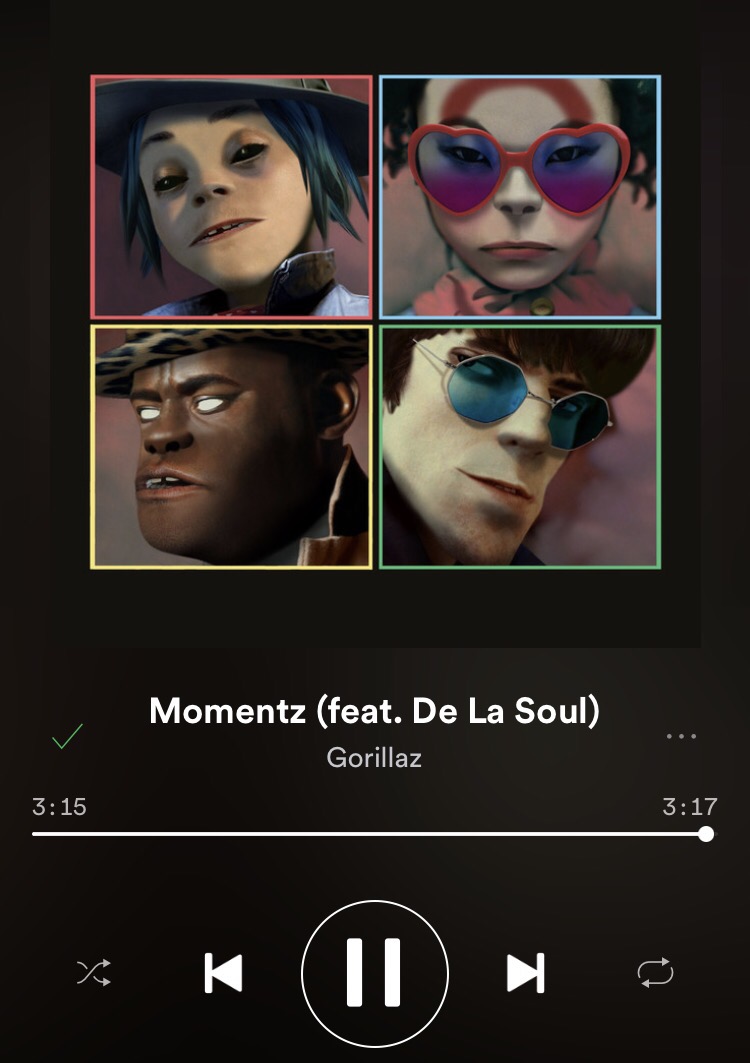
    Gorillaz ha sacado su nuevo disco! 😀